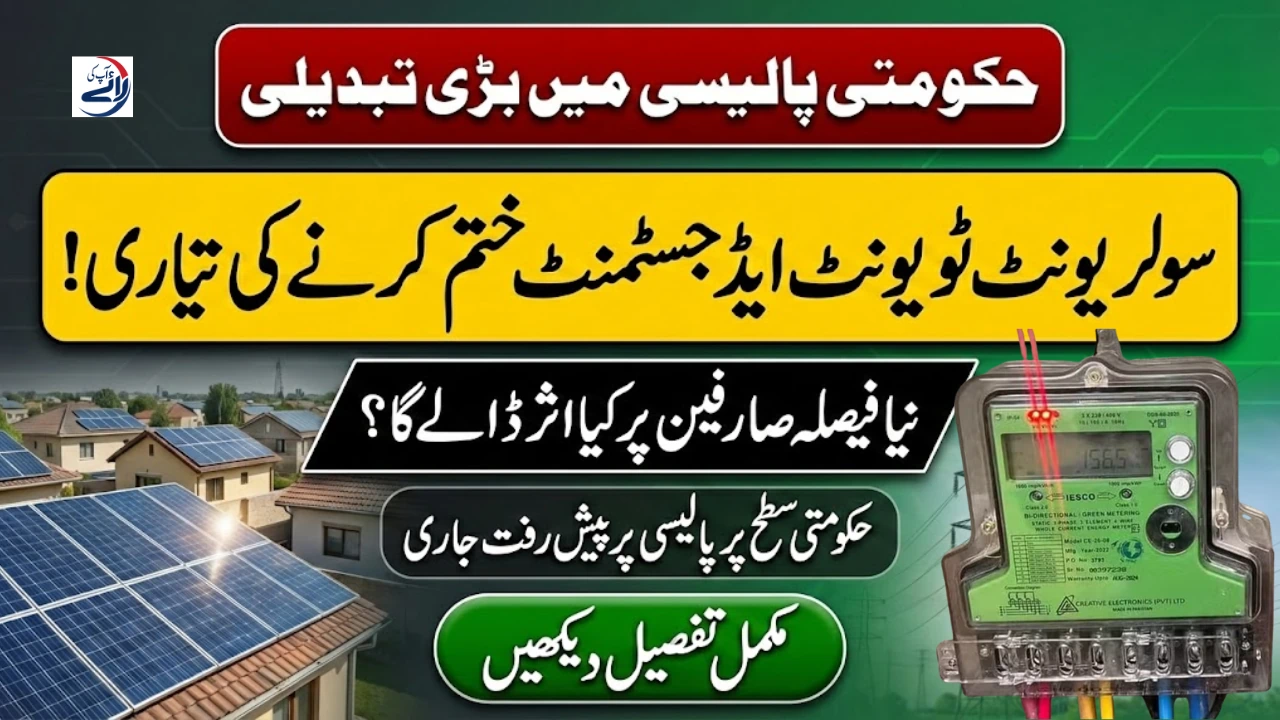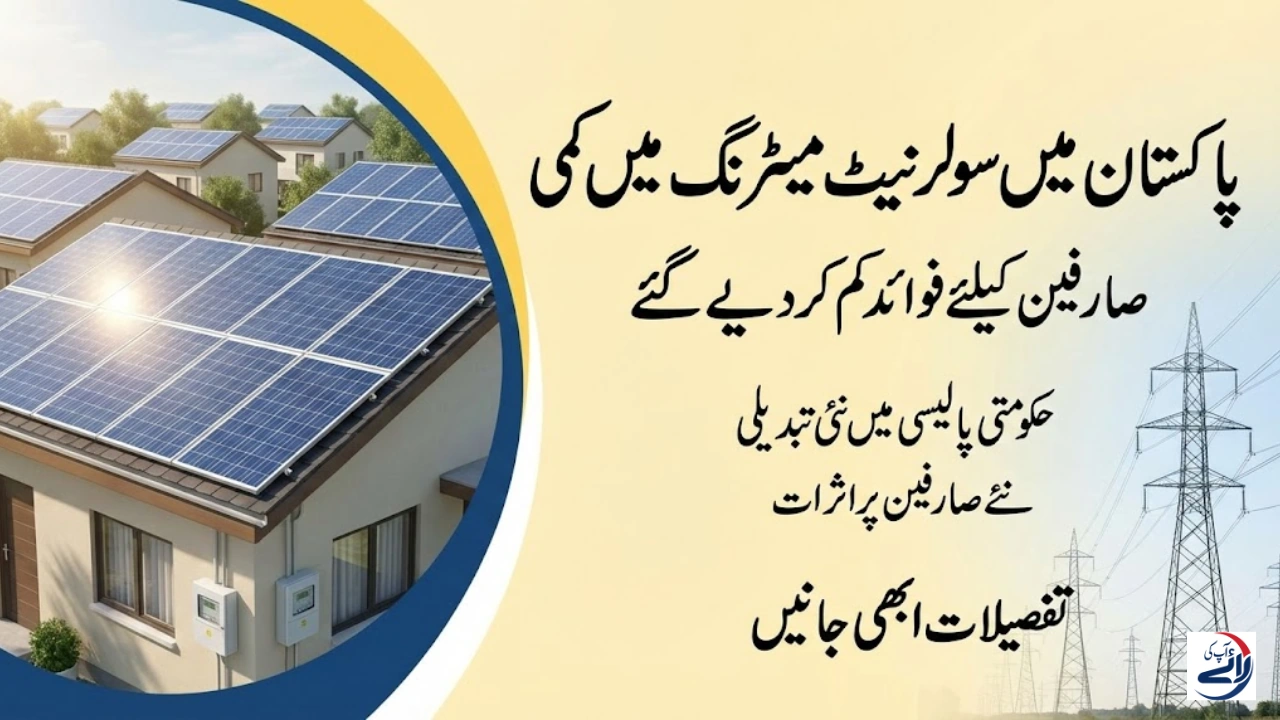
For thousands of households that invested in rooftop solar to cut electricity bills, recent news has brought uncertainty. Many families made the shift believing net-metering would offer stable returns over the long term. Now, regulators have signaled major changes to solar net-metering, raising questions about future savings and planning.
This article explains what has changed, who will be affected, and what solar consumers should do next, in clear and simple language.
What Is the Latest Update
The National Electric Power Regulatory Authority (NEPRA) has proposed changes to Pakistan’s solar net-metering framework and has scheduled a public hearing on February 6 to review stakeholder feedback.
The proposed changes are part of the draft Prosumer Regulations 2025, which aim to update rules as on-grid solar capacity expands nationwide. These changes, if approved, would reduce benefits for new solar consumers while keeping existing contracts protected until expiry.
What Exactly Is Changing in Net-Metering Rules
Under the draft regulations, several key adjustments have been proposed that affect how solar power is installed, billed, and compensated.
Key Proposed Changes
-
Lower installation limit:
New solar systems would be limited to a consumer’s sanctioned load, replacing the current allowance of up to 150% of sanctioned capacity. -
Shorter contract period:
New net-metering agreements would be reduced from 7 years to 5 years, with renewal only by mutual consent. -
Shift from net-metering to net-billing:
Exported electricity would be credited at a lower fixed rate, while imported electricity would be charged at the regular consumer tariff. -
Lower export rate:
The proposed credit for surplus power is the national average energy purchase price, estimated around Rs. 13 per unit, compared to the earlier average near Rs. 26 per unit.
These changes significantly alter the financial equation for new solar adopters.
Who Will Be Affected by These Changes
The impact varies depending on whether a consumer already has net-metering or plans to install solar.
Existing Net-Metering Consumers
-
Existing users will continue under their current 7-year contracts
-
No immediate change until contracts expire
-
Terms remain protected for the agreed duration
New Solar Consumers
-
Lower export compensation
-
Reduced long-term savings
-
Smaller allowed system size
-
Shorter agreement duration
This means future adopters may see slower payback periods compared to earlier users.
NEPRA’s Role in Solar Regulation
Under the proposed framework, NEPRA will directly regulate and license solar systems ranging from 1 kW to 1 MW. This central oversight is intended to standardize growth and manage grid stability as rooftop solar adoption increases.
The regulator has stated that the goal is to modernize regulations, not discourage renewable energy, but consumer groups have raised concerns about reduced incentives.
Why These Changes Are Being Considered
According to NEPRA, on-grid solar capacity has grown rapidly, placing financial and operational pressure on the power system.
Key reasons cited include:
-
Rising number of prosumers exporting power
-
Cost burden shifting to non-solar consumers
-
Grid management challenges
-
Need for predictable long-term pricing mechanisms
The proposed shift to net-billing is intended to balance system costs, though it reduces direct benefits for individual households.
What Solar Consumers Should Do Now
For both existing and future solar users, planning is critical.
If You Already Have Net-Metering
-
Review your contract expiry date
-
Continue benefiting under current terms
-
Avoid panic or unnecessary changes
If You Are Planning Solar Installation
-
Recalculate payback based on lower export rates
-
Size your system closer to actual consumption
-
Consider self-consumption over export
-
Wait for final decision after the public hearing
If You Are Unsure
-
Attend or follow outcomes of the February 6 hearing
-
Seek advice from licensed installers
-
Avoid rushing into oversized installations
Short Clarity Section – Common Confusion
Are existing net-metering users affected immediately?
No. Existing contracts remain valid until expiry.
Is solar still worth installing?
Yes, but savings will depend more on self-use than exports.
Will Rs. 13 per unit be fixed forever?
It is a proposed estimate and may change after review.
Is this final policy?
No. It is under review and subject to stakeholder input.
What Happens Next
NEPRA will consider feedback from government bodies, utilities, solar companies, and consumers during the public hearing. A final decision will be announced after the consultation process is complete.
Any approved changes would apply prospectively, not retroactively.
Conclusion
The proposed changes to solar net-metering in Pakistan mark a turning point in how rooftop solar is incentivized. While existing users remain protected for now, new consumers may face reduced benefits, especially on exported electricity.
Solar energy still offers value through reduced grid reliance, but future adopters will need smarter system sizing and realistic expectations. Staying informed and planning carefully will be key as Pakistan’s solar policy enters its next phase.
Latest Updates