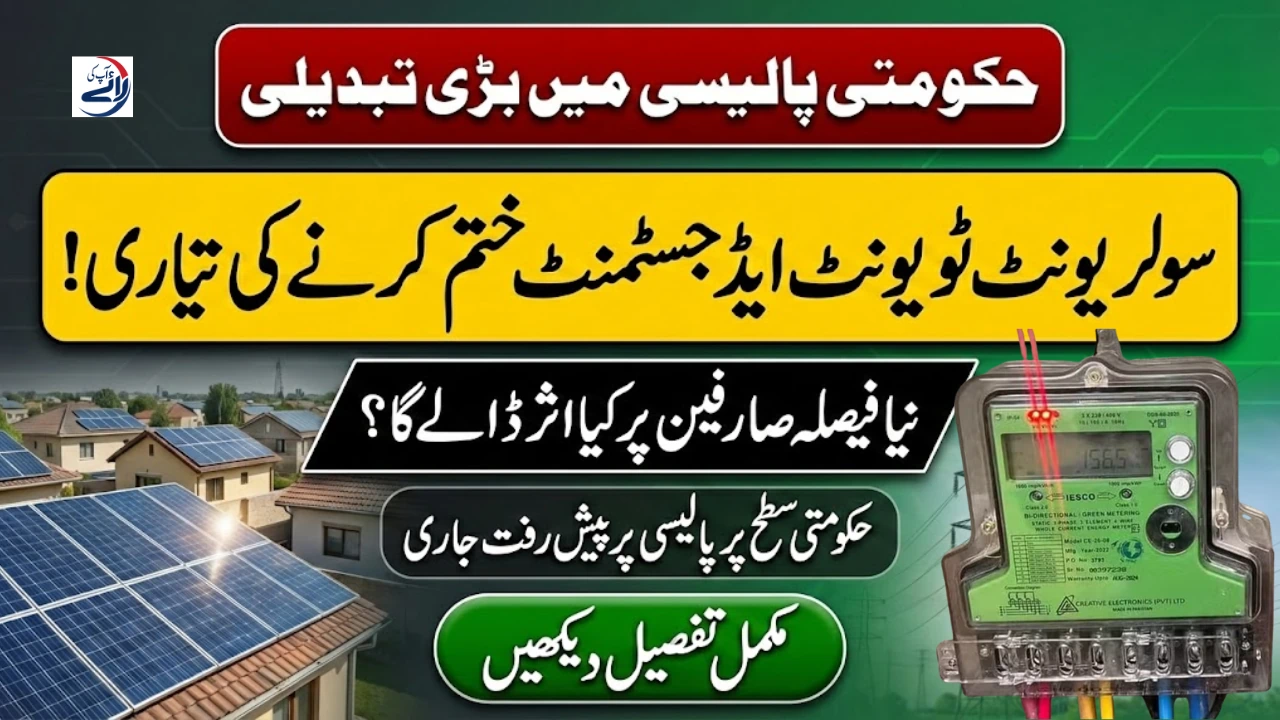
For thousands of households that invested in rooftop solar, the promise was simple: generate electricity, offset your usage, and reduce monthly bills. That understanding is now set to change. The federal government has moved forward with a major policy shift that will end the unit-to-unit adjustment system for solar consumers, signaling a new direction for how surplus solar power is valued in Pakistan.
This development has raised important questions for both existing solar users and those planning new installations.
What Is the Latest Update
The government is advancing a plan to replace the current net metering system with a Net Billing framework. Under this proposed change, solar consumers will no longer be able to directly offset exported electricity units against imported units on a one-to-one basis.
The proposal is part of the Draft Prosumer Regulations 2025, which are scheduled for review at a public hearing on February 6, 2026. The hearing will consider feedback from consumers, utilities, and industry stakeholders before any final decision is made.
What Is Changing Under the New Policy
The shift from net metering to net billing introduces several important changes in how solar power is calculated and compensated.
End of Unit-to-Unit Adjustment
Currently, solar users can offset each exported unit against a consumed unit, effectively reducing their bill at the same rate. Under the proposed system, this direct adjustment will end.
Instead:
-
All electricity taken from the grid will be billed at the full applicable tariff
-
Electricity exported to the grid will be credited separately at a fixed rate
This means imports and exports will no longer cancel each other out.

Proposed Reduction in Buyback Rate
Another major change is the proposed reduction in the rate paid for surplus solar electricity.
-
Proposed credit rate: Approximately Rs. 11.30 to Rs. 13 per unit
-
Current average rate: Around Rs. 26 to Rs. 27 per unit
This represents a significant decrease in the value of exported electricity for new solar consumers.
Changes to Solar System Size Limits
Under the draft regulations, the maximum allowable solar system capacity will be reduced.
-
Current limit: Up to 150% of sanctioned load
-
Proposed limit: 100% of sanctioned load
This change aims to discourage oversized systems that generate large surpluses for export rather than self-consumption.
Shorter Contract Duration for New Users
The duration of new net billing agreements is also proposed to change.

-
Existing duration: 7 years
-
Proposed duration for new users: 5 years
Any renewal after the initial term would require mutual consent, adding uncertainty for long-term planning.
Who Will Be Affected by This Policy Shift
The impact will differ depending on whether a consumer already has net metering or plans to install solar in the future.
Existing Solar Consumers
-
Users with valid 7-year net metering contracts are expected to remain protected until their contracts expire
-
Their existing terms are likely to continue without immediate change
New Solar Consumers
-
Lower export compensation
-
Slower recovery of installation costs
-
Greater focus on self-consumption rather than export

The policy primarily affects future installations, not existing agreements.
Impact on Solar Payback Period
Industry experts warn that the proposed changes could extend the payback period for new solar systems.
-
Earlier payback: Around 2 years under net metering
-
Expected payback: Up to 5 years under net billing, depending on usage patterns
This makes careful system sizing and consumption planning more important than ever.
Why the Government Is Proposing These Changes
The government has justified the reforms by pointing to the financial burden on the national grid and non-solar consumers.
According to official estimates, the earlier net metering model created a cost impact of around Rs. 159 billion, largely due to high buyback rates and cross-subsidies.
The proposed changes aim to:
-
Reduce strain on grid finances

-
Create a more balanced cost structure
-
Align incentives with grid stability
What Solar Consumers Should Do Now
With the policy still under review, immediate panic is not necessary, but planning is important.
Practical Guidance
-
Existing users should review their contract expiry dates
-
Prospective buyers should recalculate savings based on net billing
-
Focus on maximizing daytime self-consumption
-
Avoid oversized systems designed mainly for export
-
Follow outcomes of the February 6 public hearing closely
Waiting for final rules before making major decisions is advisable.

Short Clarity Section – Common Confusion
Is net metering ending immediately?
No. Existing contracts are expected to remain valid until expiry.
Will solar still reduce bills?
Yes, but savings will depend more on self-use than exports.
Is the buyback rate final?
No. It is proposed and subject to review after the hearing.
Does this affect all provinces?
Yes. The policy applies nationwide once approved.
What Happens Next
The public hearing scheduled for February 6, 2026 will play a key role in shaping the final regulations. After stakeholder input, NEPRA will decide whether to approve, modify, or delay the proposed framework.
Any approved changes are expected to apply prospectively, not retroactively.
Conclusion
The government’s move to end unit-to-unit solar adjustment represents a fundamental shift in Pakistan’s rooftop solar policy. While existing users are likely to remain protected for now, new consumers will face lower export rates, stricter capacity limits, and longer payback periods.
Solar energy still offers long-term value, but the focus is shifting from exporting power to using what you generate. Staying informed and planning carefully will be essential as Pakistan enters this new phase of solar regulation.