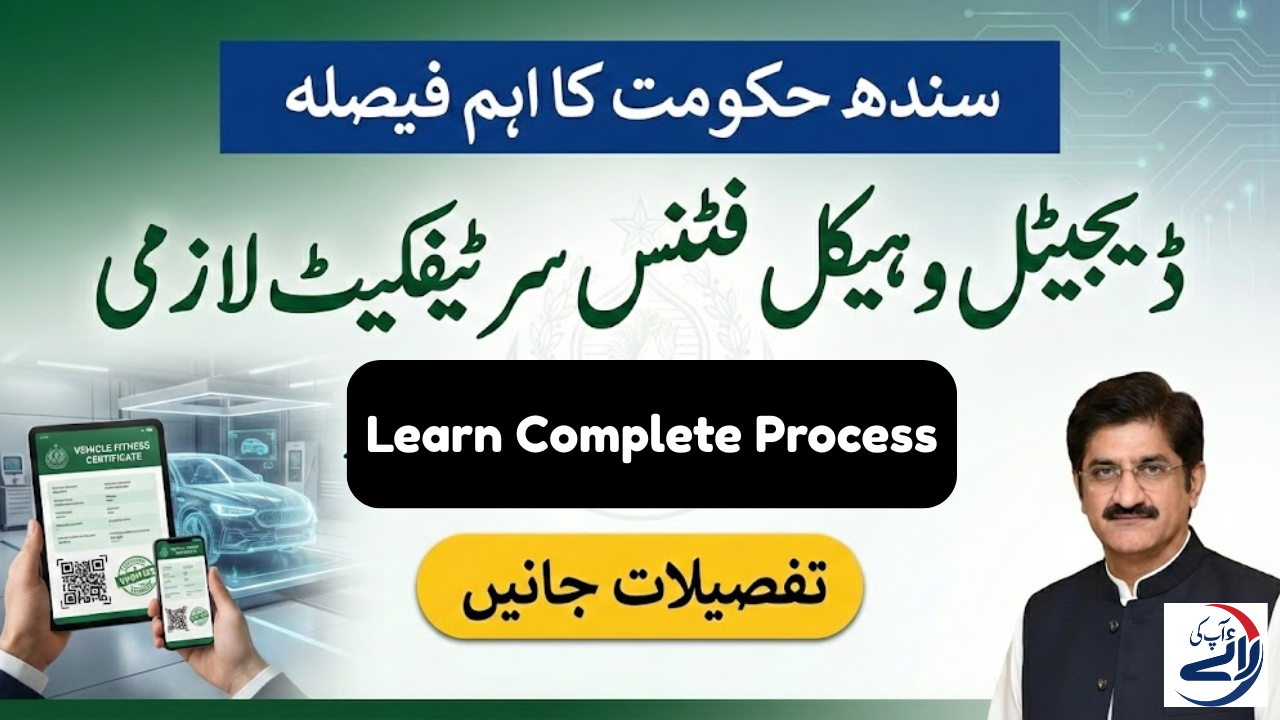
Road safety has long been a concern for commuters in Sindh, especially as traffic volume increases and older vehicles remain in use. To address these risks and close long-standing gaps in enforcement, the Sindh Government has introduced a fully digital vehicle fitness certificate policy, bringing a major shift in how vehicles are inspected and allowed to operate on roads.
This new policy aims to improve safety, transparency, and accountability across the province.
What Is the Latest Update
The Sindh Government has transitioned vehicle fitness certification to a completely computerized system, making digital certification mandatory for all vehicles operating in the province. The policy was announced on January 31, 2026, and replaces the earlier manual process that relied on limited inspectors and paper-based approvals.
Under the new system, no vehicle is allowed on Sindh roads without a valid digital fitness certificate.
Why the Digital Fitness Policy Was Introduced
The manual inspection system had loopholes that allowed unfit vehicles to operate, increasing accident risks. The digital policy is designed to:
-
Eliminate manual approvals and fake certificates
-
Reduce road accidents caused by mechanically unfit vehicles
-
Improve enforcement through centralized records
-
Ensure equal rules for all vehicles, regardless of origin
The shift reflects a broader move toward technology-based governance.
Who Is Affected by This Policy
The new rules apply to a wide range of vehicle owners and operators.
Affected Groups Include
-
Private vehicle owners in Sindh
-
Commercial transport operators
-
Public transport vehicles
-
Vehicles entering Sindh from other provinces
Whether a vehicle is registered in Sindh or elsewhere, compliance is now mandatory.
Inter-Provincial Vehicle Requirements
A key change under the policy affects vehicles registered outside Sindh.
New Requirement for Other Provinces
Vehicles from Punjab, KP, and Balochistan must now obtain a Sindh-issued digital fitness certificate to operate within the province. Manual fitness certificates issued by other regions are no longer accepted.
This ensures uniform safety standards across provincial borders.
Expansion of Modern Inspection Centers
To support the digital policy, Sindh has expanded modern vehicle inspection centers across the province.
Earlier, inspections were limited to just two inspectors. The new system introduces:
-
Multiple computerized inspection centers
-
Standardized testing procedures
-
Digital recording of inspection results
This improves access and reduces delays for vehicle owners.
New Safety Technology Requirements
The policy also introduces mandatory safety technologies, especially for commercial vehicles.
Requirements for Heavy and Light Commercial Vehicles
-
GPS tracking devices
-
360-degree external cameras
-
High-definition driver monitoring systems
These tools help monitor driving behavior and improve response during emergencies.
Under-Run Protection Made Compulsory
To reduce fatal accidents involving smaller vehicles, under-run protection guards are now mandatory for heavy vehicles. These guards prevent motorcycles and small cars from being crushed under large trucks during collisions.
This measure directly targets accident severity rather than just compliance.
Penalties and Enforcement Measures
The government has already launched a strict enforcement drive.
Enforcement Results So Far
-
Over 56,000 unfit vehicles penalized
-
More than Rs. 820 million recovered in fines
Penalty Structure
-
Initial violations: Minor fines
-
Second violation: Up to Rs. 200,000
-
Third violation: Up to Rs. 300,000
If a vehicle remains non-compliant for 14 days, its registration can be permanently canceled.
Age Limits Introduced for Public Transport
As part of broader reforms, the government is phasing out older public transport vehicles.
Maximum Age Limits
-
Inter-provincial vehicles: 20 years
-
Inter-city vehicles: 25 years
-
Intra-city vehicles: 35 years
These limits aim to gradually remove outdated and unsafe vehicles from roads.
What Vehicle Owners Should Do Now
Vehicle owners should take early action to avoid penalties.
Practical Steps
-
Check your vehicle’s fitness status
-
Visit an authorized inspection center
-
Obtain the digital fitness certificate
-
Install required safety equipment if applicable
-
Verify status through official online portals
Early compliance helps avoid fines and registration issues.
Short Clarity Section – Common Confusion
Is the digital certificate mandatory for private cars?
Yes. All vehicles must have a digital fitness certificate.
Are old manual certificates valid?
No. Manual certificates are no longer accepted.
Do vehicles from other provinces need Sindh certification?
Yes, to operate within Sindh.
Can registration really be canceled?
Yes, if non-compliance continues beyond 14 days.
Why This Policy Matters
Unfit vehicles pose risks not just to drivers, but to everyone on the road. By enforcing digital certification, Sindh aims to create safer roads, fair enforcement, and a transparent system that protects lives.
This policy represents a shift from reactive penalties to preventive safety management.
Conclusion
The Sindh Government’s Digital Vehicle Fitness Certificate Policy marks a significant step toward safer and more accountable road transport. With mandatory digital certification, expanded inspection centers, stricter penalties, and modern safety requirements, the province is setting clearer standards for vehicle operation.
Vehicle owners are advised to comply early, use official inspection channels, and stay informed. Responsible compliance today can prevent accidents, fines, and long-term inconvenience tomorrow.
Latest Updates