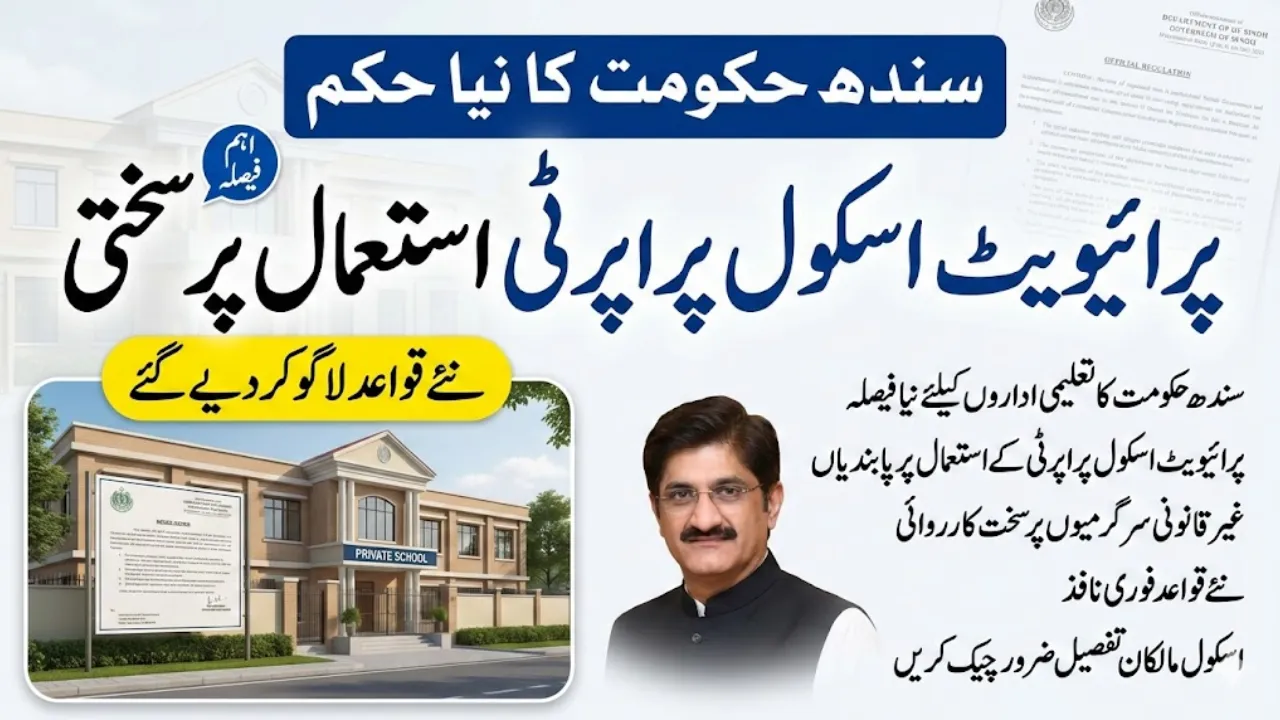
For parents, student safety inside school premises is a top concern. Classrooms are meant for learning, not for commercial activity or unsafe living arrangements. To address growing risks and misuse of school spaces, the Sindh Government has tightened rules on how private school properties can be used, bringing clearer boundaries and stronger oversight across the province.
This move is being seen as an important step toward safer schools and better accountability in the private education sector.
What Is the Latest Update
The Sindh education authorities have imposed a complete ban on the use of private school buildings for non-educational purposes. Under the new enforcement drive, private school premises can now be used only for teaching and learning activities.
Any use of school property for commercial businesses or residential living has been declared a serious violation of education laws.
What Has Changed Under the New Rules
Previously, some private schools were found operating shops, offices, or even living quarters within school buildings. Under the updated enforcement:
-
School buildings must be used strictly for education
-
Shops, rental units, or residences inside school premises are prohibited
-
Non-educational use is treated as a legal violation
-
Authorities have increased monitoring and inspections
This marks a shift from warnings to direct regulatory action.
Who Is Affected by These Rules
The new measures directly impact private schools across Sindh, but they also affect families, staff, and operators linked to these institutions.

Affected Groups Include
-
Owners and administrators of private schools
-
Schools operating in mixed-use buildings
-
Parents concerned about student safety
-
Teachers and staff working in unsafe structures
Public schools are not the focus of this directive, which targets the private education sector.
Province-Wide School Inspections Begin
To ensure compliance, the Sindh education department has started province-wide inspections of private schools.
What Inspectors Are Checking
-
Use of premises strictly for education
-
Availability of valid structural fitness certificates
-
Condition of the building and safety standards
-
Presence of any commercial or residential activity
Schools operating in unsafe or dilapidated buildings have been instructed to vacate immediately.
Structural Safety and Legal Responsibility
One of the most important parts of this update is accountability. Authorities have made it clear that:
-
Schools must submit structural fitness certificates
-
Unsafe buildings cannot be used for schooling
-
In case of an accident, full legal responsibility lies with the school administration
This places direct responsibility on owners to ensure safety rather than ignoring risks.
Fire Safety Compliance Made Mandatory
Alongside building use restrictions, the Sindh government has reinforced fire safety requirements for private schools.
Mandatory Fire Safety Measures
-
Installation of fire alarms
-
Functional smoke detectors
-
Availability of fire extinguishers

-
Clear emergency exits and staircases
-
Display of fire evacuation plans inside school buildings
Schools are also required to conduct regular inspections of electrical systems and high-risk areas.
Penalties for Non-Compliance
The government has warned that schools failing to comply may face strict action.
Possible consequences include:
-
Suspension of school registration
-
Cancellation of registration
-
Sealing of school premises
-
Legal action in case of negligence or accidents
These penalties aim to ensure that rules are taken seriously.
Why the Government Took This Step
Officials have stated that the primary goal of these measures is student safety and accountability. Overcrowding, unsafe buildings, and commercial misuse increase the risk of accidents and emergencies.
By enforcing clear boundaries, the government aims to:
-
Protect students and staff
-
Improve safety standards
-
Strengthen regulation of private schools
-
Reduce risks of fire and structural accidents
What School Owners and Parents Should Do Now
With inspections underway, immediate action is important.
For School Administrations
-
Remove any non-educational activities from premises
-
Obtain and submit valid structural fitness certificates
-
Ensure fire safety equipment is installed and functional

-
Keep emergency exits clear at all times
For Parents
-
Ask school management about safety compliance
-
Observe building conditions and exits
-
Report concerns to education authorities if needed
Short Clarity Section – Common Confusion
Are private schools allowed to have shops or residences inside?
No. This is now strictly banned.
Will all private schools be inspected?
Yes. Inspections are being carried out across the province.
Can a school operate in an unsafe building?
No. Unsafe or dilapidated buildings must be vacated.
Who is responsible if an accident happens?
The school administration bears full legal responsibility.
Conclusion
The decision to tighten rules on the use of private school properties in Sindh sends a clear message: schools must prioritize education and safety above all else. By banning commercial and residential use, enforcing inspections, and making fire safety mandatory, the government is working to create safer learning environments for children.
Private school owners must act quickly to comply, while parents are encouraged to stay informed and vigilant. In the long run, these measures are expected to strengthen trust, safety, and accountability across Sindh’s education sector.